
Rebranding Atlas RFID Meant Rebuilding the Engine First
A lot of B2B rebrands get scoped as design projects, then run into the platform underneath halfway through. Atlas RFID came to us with the more useful version of that conversation already worked out. They knew the brand needed to evolve. They also knew the BigCommerce store underneath couldn't carry the next chapter without serious work. Both pieces had to move together, on purpose, in parallel.
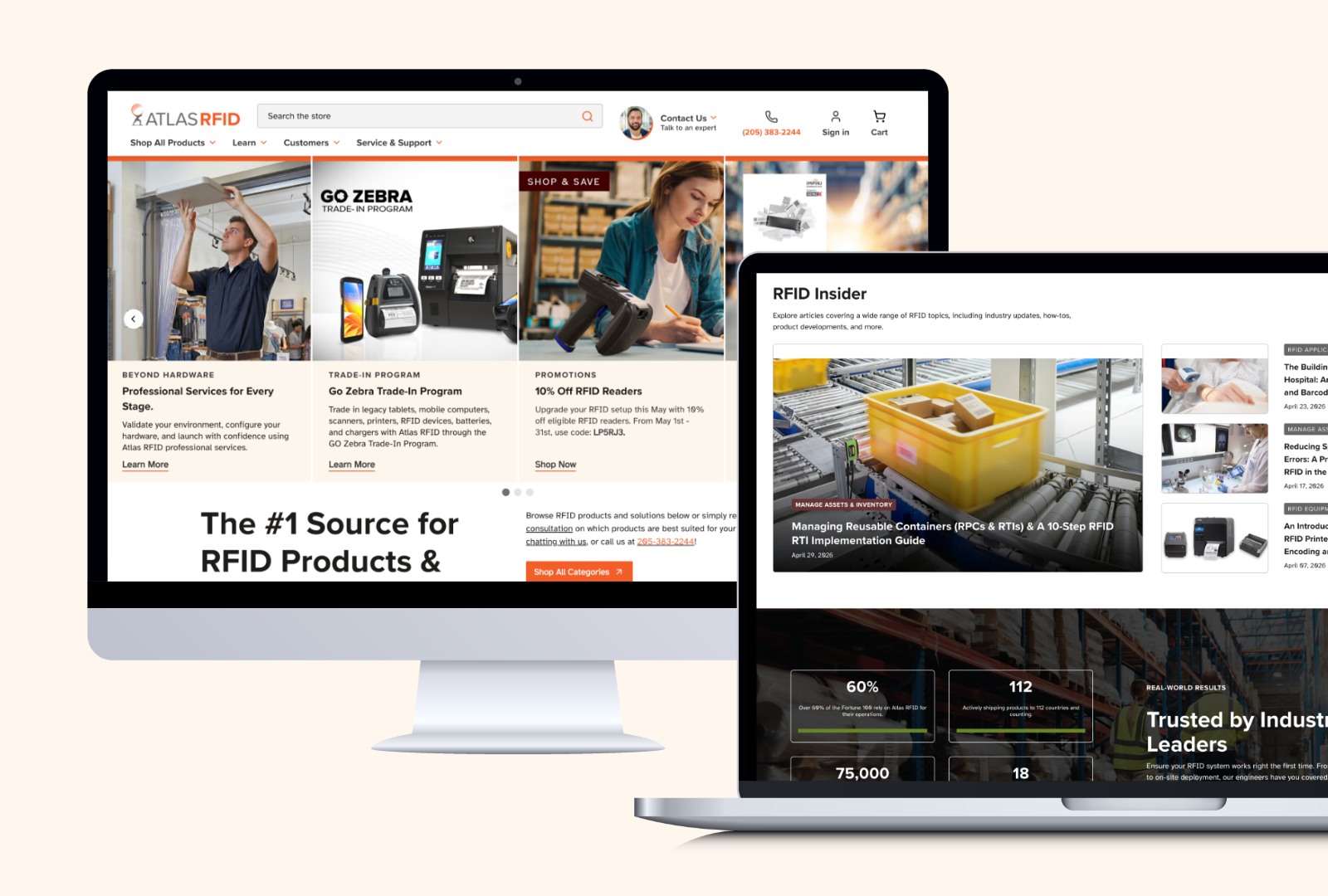
That's the engagement we scoped: a Brand & Experience Evolution project sitting alongside an Impact Ops retainer, running side by side for eight months, with two workstreams feeding the same launch.
The brand work is the part you'll see. The platform work is the part that makes the brand work durable. Here's how both pieces actually came together.
What We Inherited
Before getting to the brand surface, it's worth naming the state of the platform we were working with. The phrase we kept using internally was hardcoded everything. Footer links, homepage sections, the Shogun landing pages, the navigation. Anything the marketing team wanted to touch had to route through a developer and a code deploy. Small content updates were not small.
A few of the specific constraints worth naming:
Cornerstone 6.7.0, ten versions behind current. Anything new on the brand side was blocked by the outdated theme.
BigCommerce Catalog API v2, with a rigid QSKU data model that turned routine product changes into developer tickets.
No staging environment. No way for stakeholders to review anything before it hit production.
No CI/CD process. Releases happened, but not in a way you'd describe as a process.
That last one is the quiet killer. Without staging, every change is a bet. Without CI/CD, every release is a story.
So, before we could responsibly ship a single new brand element, we had to give Atlas a platform that could absorb it.
From Transactional Store to Solutions Partner
The brand work itself was a reframe, not a refresh. Atlas RFID isn't just a place to buy a reader and a few tags. They're a deeply expert team that helps construction, manufacturing, healthcare, and retail customers solve real RFID problems. Their existing site read like a transactional storefront. Their actual business reads like a consultancy with a catalog attached.
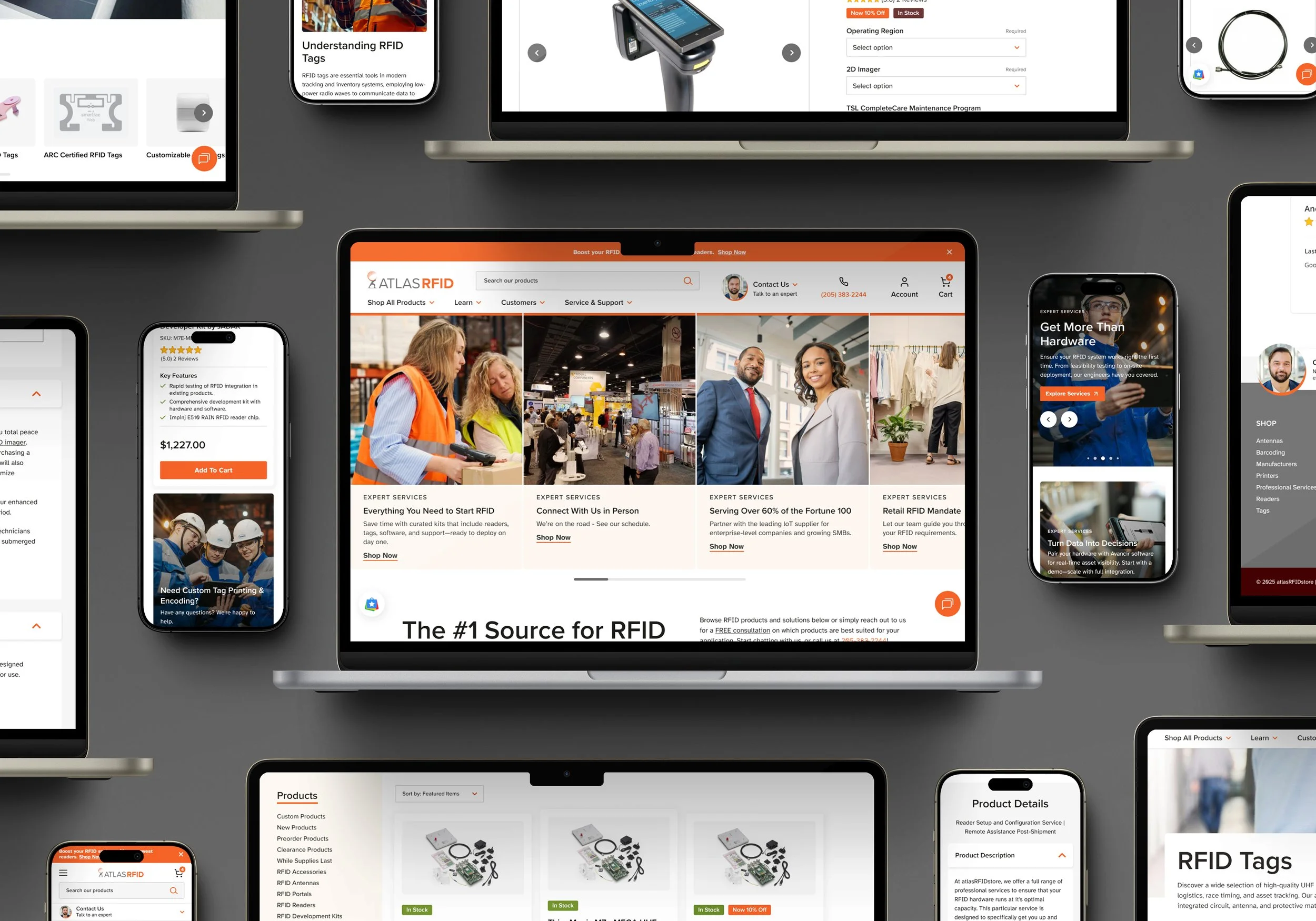
So we rebuilt the experience around how Atlas customers actually evaluate RFID solutions. Expert-led messaging up front. Vetted product selection. Enterprise credibility signals where they mattered. Technical depth made accessible without being dumbed down. The refined color palette and typography were real (and they all meet WCAG AA accessibility standards), but the bigger move was making every touchpoint feel guided, human, and built around the customer's goal rather than the cart.
Custom Widgets, So Marketing Can Move Without a Developer
The Page Builder layer was the first thing we needed to rebuild. We shipped twelve custom widgets (Hero, Accordion, Promo Banner, Video, Blog, Contact Card, Category Banner, Brand Slider, and a handful of others) designed to give the Atlas team building blocks they could drop into pages without writing code.
The criteria we held the widgets to were simple. They had to look on-brand without configuration. They had to be reusable across the site. They had to not break when marketing got creative.
The outcome is the thing that matters. Atlas can now run a campaign, update a category banner, or stand up a new landing page without filing a ticket. That's a real operational win, and it's the kind of unglamorous infrastructure work that pays back for years.
The Shogun and BigCommerce Page Builder Problem
Here's the one most B2B teams don't see coming until they're in it: Shogun and BigCommerce's native Page Builder are not compatible. You can't intermix layouts or components. If you've built your homepage in one and your landing pages in the other, your brand will fight itself every time a visitor crosses between them.
We had two problems to solve at once.
First, Shogun injects its own CDN-served CSS that overrides brand styles. Out of the box, your fonts, colors, and button shapes are going to look like Shogun's defaults, not yours. We built an SCSS override layer that enforces font-family, brand colors, and button geometry across every Shogun-rendered surface. Still Shogun underneath. Fully on-brand on top. (We later simplified that override file from 303 lines to 51. The first version solved the problem. The second version is the one we're proud of.)
Second, we built the Shogun custom components to match the BigCommerce Page Builder components one-for-one. Same visual language, same options, same content shape. The Atlas team can now reuse components across both systems without a developer in the loop and without the visitor noticing they've crossed a boundary.
That second piece is the kind of integration work that doesn't show up in a portfolio screenshot. But it's the difference between a site that looks unified and one that actually is.
CI/CD, Environments, and the Boring Stuff That Matters
You can't build flexibility on top of a release process that hopes for the best. So a meaningful chunk of the eight months went into developer experience and deployment hygiene.
By launch, Atlas had four environments (UAT, Staging, Integration, and Production) and a real CI/CD setup running through GitHub Actions. Workflows for promote-to-env, Monday.com auto-linking, and release merge notifications meant every change had a trail and every release had a checkpoint.
The numbers, for the curious: 804 commits across 386 pull requests, contributed by eight people, between August 2025 and March 2026. December was the peak velocity month, with 185 commits, when the custom widgets, blog redesign, PDP gallery, and account pages all landed. None of that velocity is possible without staging. Or it is, but you pay for it later, in production incidents.
Why the Partnership Mattered
Tom Ascher, Atlas's Head of Marketing & eCommerce, summed up the shape of the engagement better than we could:
“From the beginning, we viewed this as much more than a visual redesign. The goal was to modernize the operational foundation underneath the brand so our team could move faster, support customers better, and scale the business more effectively over time.”
Atlas gave us the room to identify risks early, raise estimates upfront when something was going to be harder than first scoped, and make architectural calls without renegotiating the contract every time. That's not a soft skill. That's the operating condition that lets a complex build ship clean.
If you're scoping a B2B rebrand and you already suspect the brand work and the platform work need to move together, that's the conversation we're built for. Aysnd's custom software and ecommerce strategy work focuses on exactly this kind of integrated rebuild, the unsexy infrastructure that lets the brand surface actually move. You can see more of the pattern across our portfolio.
The brand is the part you'll see. The system underneath is the part that will keep paying back.
Let's talk about what your next chapter actually needs to ship.
About Our Partner
Tom Ascher is Head of Marketing & eCommerce at Atlas RFID, where he leads digital strategy, ecommerce operations, merchandising, and customer experience initiatives across the Atlas platform ecosystem.
With more than 20 years of experience in ecommerce and digital marketing leadership, Tom has led large-scale commerce, branding, and operational transformation initiatives across both B2B and B2C organizations, with a focus on scalable infrastructure, customer experience, and long-term digital growth.
